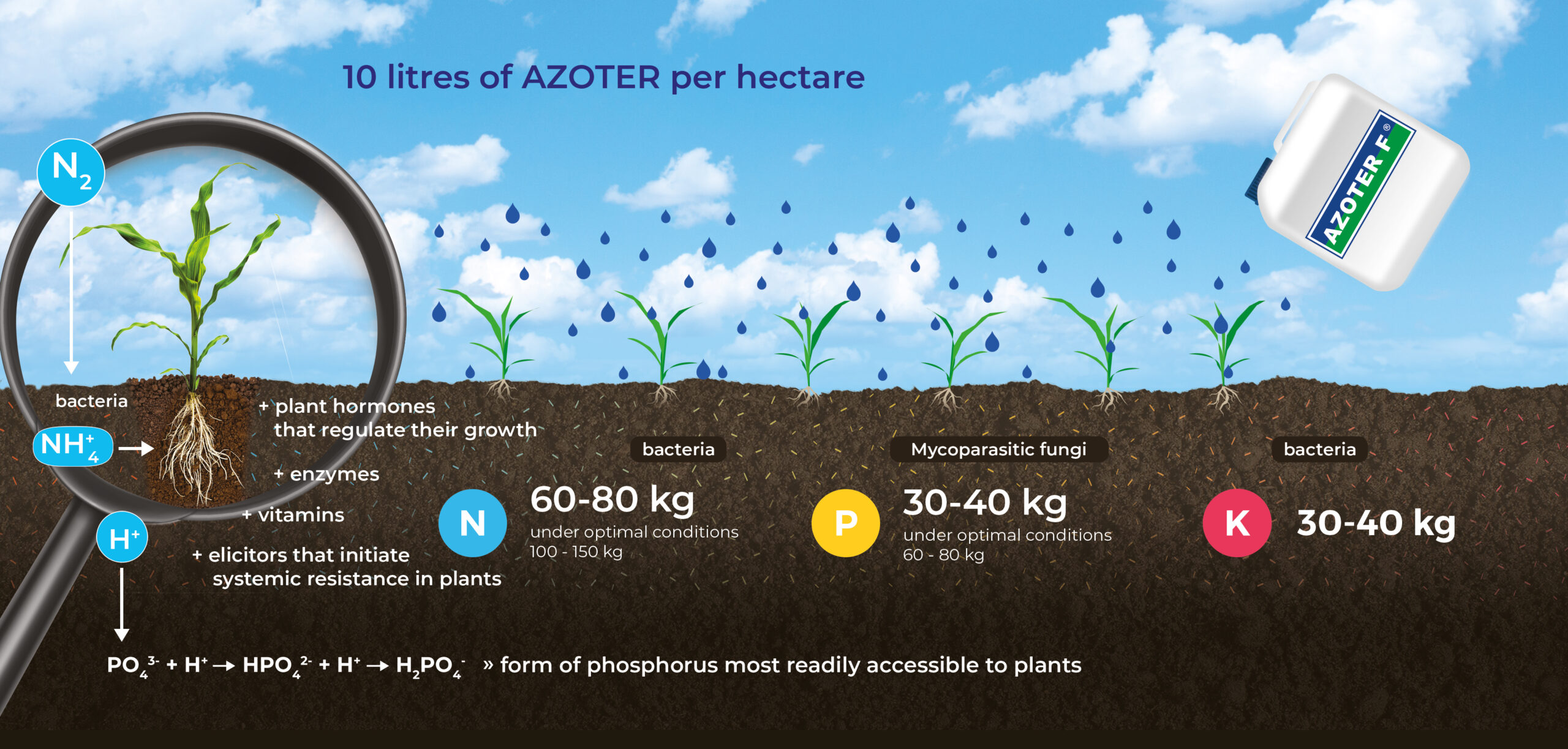
Soil microorganisms mobilize biogenic elements from organic and mineral soil forms that are important for plants. They release or secrete various vitamins, antibiotics and growth-supporting substances (stimulants) into the environment. Therefore, microbial life in soil determines a whole range of processes that are responsible for the course of various physical and chemical processes which specifically affect the nutrient supply to the plant roots. Soil bacteria significantly affect the overall soil productivity and the quality of plant production. They fix atmospheric nitrogen, make hard-to-access forms of nutrients available, e.g. phosphorus, they participate on the mineralization of organic substances and accelerate the decomposition of plant residues or primary organic matter in the soil, which affects the soil-forming process and the soil properties.
Due to the composition of AZOTER bacterial fertilisers, the microbial life in the soil is restored, so the fertility and soil productivity is increased. It also has a positive impact on the quality of crop production. AZOTER bacterial fertilisers contain three types of bacteria strains involved in non-symbiotic nitrogen fixation. They support decomposition processes of organic matter in the soil, they help important macro biogenic elements in the soil, especially phosphorus, to be available from insoluble form to accessible form. Due to the high concentration of bacteria contained in the fertiliser, the application of AZOTER fertiliser significantly increases the amount of bacterial microflora in the soil. AZOTER fertiliser contains strains of Azotobacter chroococcum bacteria and Azospirillum brasilense bacteria, which are involved in non-symbiotic nitrogen fixation, and make atmospheric nitrogen available for plant consumption. On the other hand, bacterium Bacillus megaterium is involved in making phosphorus available.